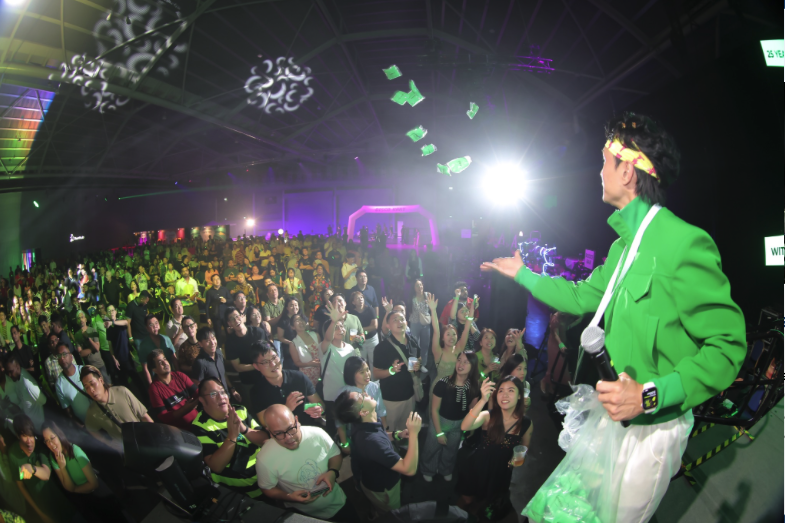
Corporate town halls, team-building retreats, and annual galas require significant budget, time, and logistical resources. For HR leaders and internal communicators, securing buy-in for these initiatives means proving their financial value to the C-suite.
For years, HR departments relied on subjective post-event feedback—statements like "morale seems higher" or "everyone had a great time." Today, that is no longer enough. But how do you quantify "culture" and "engagement"? The answer lies in translating qualitative feelings into quantitative data. Here is how to effectively measure the Return on Investment (ROI) of your employee engagement events and prove their strategic value.
1. Track attendance and active participation rates
The foundational metric of any corporate event success is simply who showed up. However, in an era of hybrid and remote work, RSVPs do not equal engagement. You must track active participation.
Hybrid drop-off rates. If you are hosting a hybrid event, the login count is just the beginning. Track the average view duration. If 80% of your remote workforce logged in but 50% dropped off after the first 20 minutes, your content was not retaining their attention.
Platform analytics. Look at event app downloads, profile creations, and message exchanges.
Live interactivity. Measure the exact number of employees who participated in live polls, submitted questions during Q&A, or joined virtual breakout rooms. High active participation indicates that the content was highly relevant and the format was effectively designed.
2. Utilize post-event eNPS (Employee Net Promoter Score)
Post-event surveys are standard practice, but the phrasing of your questions dictates the quality of your data. Instead of asking if they liked the food or the venue, ask questions tied directly to employer branding.
To measure an employee engagement event effectively, utilize a localized eNPS question: "On a scale of 1-10, how likely are you to recommend working at this company based on the culture demonstrated at this event?"
How to calculate eNPS. Promoters (scores 9-10) are highly engaged brand advocates. Passives (scores 7-8) are satisfied but not enthusiastic. Detractors (scores 0-6) are unhappy or disengaged. Formula: (% of Promoters) - (% of Detractors) = eNPS.
By comparing your company's baseline eNPS against the specific post-event eNPS, you gain a clear, numerical indicator of the event's cultural impact.
3. Monitor short-term productivity and collaboration
Engagement events are fundamentally designed to break down organizational silos. When people from different departments share an experience, they are more likely to collaborate efficiently afterward.
Work with department heads to monitor cross-departmental collaboration in the weeks following the event. A spike in internal communications (measured via Slack or Microsoft Teams data) or the acceleration of newly formed project teams can often be traced directly back to networking that occurred at the event. While harder to assign an exact dollar value, highlighting these "fast-tracked" projects to leadership demonstrates immediate operational HR event metrics.
4. Correlate with long-term retention rates (the big financial driver)
The most robust way to prove employee retention ROI is through turnover reduction. Turnover is the most visible and expensive cost of employee disengagement. According to the Society for Human Resource Management (SHRM), the average cost to replace an employee ranges from 50% to over 200% of their annual salary due to recruitment fees, onboarding time, and lost productivity.
While an event is just one piece of the culture puzzle, consistent, high-quality employee events correlate strongly with lower turnover. Track the retention rates of employees who regularly attend company events versus those who do not.
If your event costs $50,000 to produce, but it successfully re-engages and retains just two key employees who make $80,000 a year (saving the company roughly $120,000+ in replacement costs), the event has paid for itself entirely.