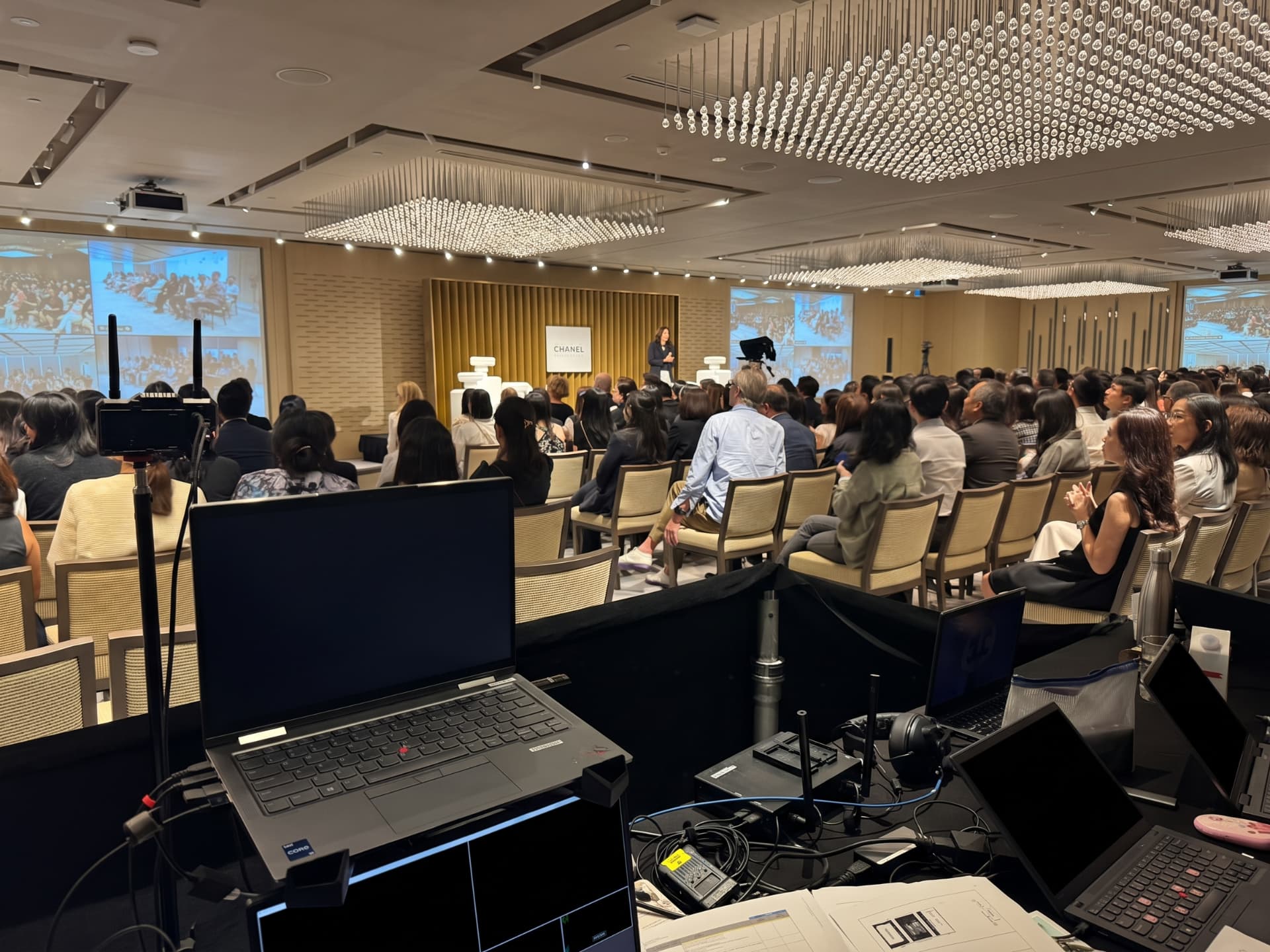
Hybrid conferences are no longer just a temporary pivot; they are the standard for global corporate events. Singapore, with its world-class infrastructure and status as a regional business hub, is one of the best places in the world to host them. However, executing a flawless hybrid conference means producing two distinct events simultaneously: a live, immersive physical gathering and a broadcast-quality virtual experience.
If one track fails, the entire event's reputation suffers. Whether you are hosting 500 delegates at Marina Bay Sands or broadcasting a specialized tech summit from Suntec, this producer-level checklist will help you navigate the complexities of hybrid event logistics.
Phase 1: Venue selection and infrastructure (3-6 months out)
A hybrid event demands much more from a venue than a traditional conference. Your venue is essentially serving as a live television studio.
Audit dedicated bandwidth. Do not rely on shared public Wi-Fi. You need a dedicated, hardwired internet line with a minimum dedicated upload speed of 20-50 Mbps strictly for the live-stream broadcast, completely separate from attendee Wi-Fi.
Evaluate Singapore venues for hybrid readiness. Venues like the Sands Expo and Convention Centre or Fairmont Singapore have heavily invested in built-in hybrid broadcast studios. Assess if the venue has the rigging capacity for additional lighting and cameras without obstructing the live audience's view.
Check ceiling height and acoustics. A common pitfall in smaller hotel ballrooms is low ceilings, which severely limit lighting angles and camera jib movements. Ensure the acoustics won't cause echo on the live feed.
Phase 2: AV and technical production (2-3 months out)
The technical requirements for a hybrid conference are exponential compared to a standard live event.
Design a multi-camera setup. A single static camera at the back of the room is a webinar, not a hybrid conference. Plan for at least three cameras: a wide shot, a tight speaker shot, and a roaming or dynamic angle for panel discussions and audience Q&A.
Implement a dual-audio mix. Live audio in a ballroom sounds completely different from broadcast audio compressed for a web stream. Ensure your AV team is running a "mix-minus" setup, providing one tailored audio feed for the physical room and a separate, equalized feed for the virtual audience.
Choose the right virtual platform. Select an event platform (like Cvent, Bizzabo, or specialized local platforms) that supports seamless API integrations, low-latency streaming, and robust virtual networking features.
Phase 3: Content and run-of-show design (1-2 months out)
Your agenda cannot be a simple copy-paste of a physical event. Virtual attention spans are significantly shorter.
Draft a dual-track run of show. You need a second-by-second schedule that dictates what the live audience sees and what the virtual audience sees at any given moment.
Assign a dedicated virtual emcee. While your main host engages the physical room, a virtual emcee should act as the voice of the remote attendees. They manage virtual Q&A, conduct backstage interviews during coffee breaks, and keep remote viewers engaged when the live audience is transitioning.
Format presentations for screens. Ensure all slide decks use high-contrast colors and large fonts (minimum 24pt). Crucially, leave the "lower third" of the slides blank to accommodate speaker name graphics and sign language interpreters or closed captioning on the live stream.
Phase 4: Risk management and rehearsals (2 weeks out)
In live production, if you haven't tested it, you should assume it will break.
Develop a "show stop" protocol. What happens if the internet drops? Have an immediate backup plan, such as a localized cellular bonding router (like a LiveU) to keep the stream alive, and a pre-recorded slate that says "Experiencing Technical Difficulties" ready to roll.
Conduct a full technical dress rehearsal. Run through the entire event with the AV crew. Test every microphone transition, lower-third graphic, remote speaker dial-in, and video playback roll.
Rehearse the Q&A. Test the workflow of taking a question from a live microphone in the room and displaying a question submitted from the virtual platform on the main stage monitors simultaneously.
The producer's bottom line
Executing this level of production requires a dedicated team of technical directors, show callers, and AV engineers. Partnering with a professional Singapore event production agency ensures that both your in-person VIPs and your global virtual audience receive a premium, uninterrupted experience.